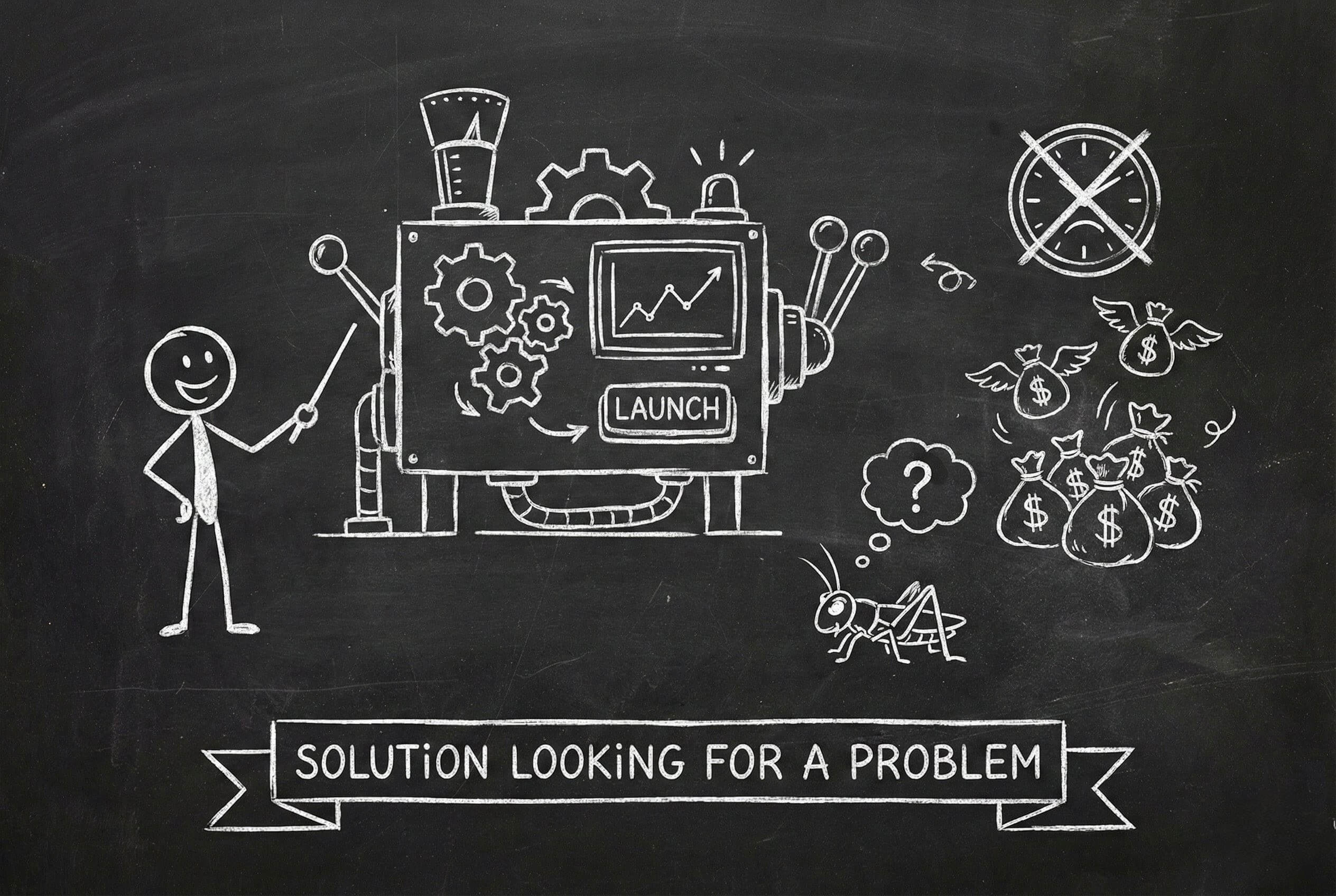
Let me tell you about the time I built the perfect SaaS product.
It had a beautiful UI. Clean code. A slick onboarding flow. Email notifications. A pricing page with three tiers (Basic, Pro, and Enterprise — very original). I even had a landing page with one of those animated hero sections that everyone says converts like crazy.
I launched it. Posted on Twitter. Told my friends. Waited for the signups to roll in.
Crickets.
Not gentle crickets. LOUD, mocking crickets that seemed to be personally laughing at my life choices.
Turns out, I'd built something nobody wanted. I'd solved a problem that didn't exist. I'd created a solution searching desperately for a problem.
Welcome to the number one mistake in SaaS: building first, validating never.
What Even Is SaaS (For the Three People Who Don't Know)
SaaS stands for Software as a Service. Instead of buying software once and installing it on your computer (remember when we did that?), you pay a monthly subscription to use it online.
Examples you probably use:
- Netflix (entertainment SaaS)
- Spotify (music SaaS)
- Gmail/Google Workspace (email SaaS)
- That project management tool your boss loves and you tolerate
The beautiful thing about SaaS: recurring revenue. Customers pay you every month. You don't have to keep selling to the same person over and over.
The terrible thing about SaaS: customers can cancel anytime. If your product sucks, they leave. If a competitor is better, they leave. If they just forget they're paying you... they eventually notice and leave.
Why Everyone Wants to Build a SaaS
1. Recurring Revenue Is Addictive
Imagine making 100k this month, and knowing you'll make AT LEAST 100k next month because customers are locked into subscriptions. That predictability is beautiful.
It's like having tenants paying rent vs. selling a house once. One is steady income, the other is a one-time windfall.
2. Scalability
Build once, sell infinitely. Your 10th customer costs you way less to serve than your first. Digital products scale better than almost anything.
3. Global Market
Your SaaS can be used by someone in Nairobi, New York, or Nigeria. Same product. No shipping costs. No customs drama. Just internet and a payment processor.
4. Sexy Startup Vibes
Let's be real, saying "I'm building a SaaS startup" sounds way cooler than "I'm a freelancer." Same hustle, different branding.
Why Most SaaS Products Fail Spectacularly
Here's the uncomfortable truth: most SaaS products fail. Not because they're badly built. Not because the code is trash. They fail because nobody wants them.
Mistake 1: Building in a Vacuum
You have an idea. It's brilliant (to you). You spend months building it. You launch. Nobody cares.
Why? Because you never asked if people actually WANTED this thing. You assumed. Assumption is the mother of all expensive mistakes.
It's like opening a restaurant that only serves boiled eggs because YOU love boiled eggs. Cool passion project. Terrible business.
Mistake 2: Trying to Solve Everybody's Problems
Your SaaS tries to do everything for everyone. It's a project management tool AND a CRM AND an email platform AND a calendar AND probably makes coffee too.
Result? It does everything badly and nothing exceptionally well.
The best SaaS products are laser-focused. Slack is just for team communication. Notion is just for note-taking and docs. They do ONE thing better than anyone else.
Mistake 3: Ignoring Distribution
"If you build it, they will come" is advice from a movie about baseball ghosts. It's not a business strategy.
You can have the best product in the world, but if nobody knows it exists, you have an expensive hobby.
Distribution — how you get customers — is often MORE important than the product itself.
Mistake 4: Pricing Like You're Guessing (Because You Are)
You look at competitors, pick a number that sounds reasonable, and hope for the best.
Or worse: you underprice because you're afraid people won't pay. So you charge 5 dollars a month and wonder why you can't afford to keep the servers running.
Pricing is psychology, economics, and dark magic combined. Getting it wrong kills your business slowly.
Mistake 5: Building Features Nobody Asked For
You keep adding features because more features = better product, right?
Wrong. More features = more complexity = more bugs = confused users = higher churn.
Every feature has a cost. Maintenance cost. Support cost. Cognitive cost for users. Choose wisely.
How to Build a SaaS That Doesn't Suck (A Better Way)
Step 1: Find a Real Problem
Not a problem you THINK exists. A problem real people complain about regularly.
How do you find these? Talk to people. Hang out in forums. Join communities. Listen to complaints. Pain points are goldmines.
Step 2: Validate Before You Build
Before writing a single line of code, sell it. Yes, sell a product that doesn't exist yet.
Create a landing page explaining what it does. Run some ads. See if people sign up for a waitlist or even pre-pay.
If nobody's interested when it's free to sign up, they definitely won't pay when it's ready.
Step 3: Build the Minimum Viable Product (MVP)
Not the full vision. Not the final form. The absolute MINIMUM version that solves the core problem.
Release it to a small group. Get feedback. Iterate. Build what people actually need, not what you think they need.
Step 4: Solve Distribution Early
Figure out where your customers hang out. Are they on LinkedIn? Twitter? Reddit? Industry-specific forums?
Go there. Be helpful. Share knowledge. Build trust. Then introduce your product as a solution.
Or go the paid route: ads, influencer partnerships, content marketing. Whatever works, but have a PLAN.
Step 5: Price Based on Value, Not Cost
If your SaaS saves a company 10 hours a week, that's worth WAY more than the 20 dollars you're charging.
Price based on the value you provide, not how much it costs you to run. Charge what people are willing to pay, not what you think is "fair."
Step 6: Obsess Over Retention
Getting a customer is hard. Keeping them is harder.
Churn (customers leaving) will kill your SaaS faster than anything. Monitor it. Fix what's causing it. Make your product so good people can't imagine life without it.
SaaS Metrics You Actually Need to Track
- MRR (Monthly Recurring Revenue): How much you make every month from subscriptions
- Churn Rate: Percentage of customers who cancel
- LTV (Lifetime Value): How much a customer pays you over their entire time using your product
- CAC (Customer Acquisition Cost): How much it costs you to get one customer
- LTV:CAC Ratio: If LTV is less than 3x your CAC, you're in trouble
If you don't know these numbers, you're flying blind.
The Reality Check
Building a successful SaaS is hard. Like, REALLY hard. The overnight success stories you hear about? They took years of grinding in the dark before anyone noticed.
Most SaaS products fail. Some fail fast (good). Some fail slowly and painfully over years (bad).
But the ones that succeed? They can change your life. Passive income. Freedom. The ability to work from anywhere. It's worth the risk — IF you do it right.
Should You Build a SaaS?
Only if:
- You've validated the idea with real potential customers
- You're solving a problem people are already trying to solve (badly)
- You have a distribution strategy beyond "post on Twitter and pray"
- You're willing to iterate based on feedback, not just build your dream vision
- You can afford to invest time and possibly money with no guarantee of return
If you answered yes to all of the above, go for it. If not, maybe validate a bit more first.
Once validated, decide on mobile-first or web-first approach based on your users. Get your SaaS pricing model right from day one. Build with API-first architecture for flexibility. Then obsess over reducing customer churn from the moment you launch.
Takeaway: Building a SaaS is less about coding skills and more about finding a real problem, validating it early, and solving it better than anyone else. Don't build in a vacuum. Talk to users. Ship fast. Iterate constantly. And for the love of God, figure out distribution before you launch. The best product nobody knows about is just an expensive side project.