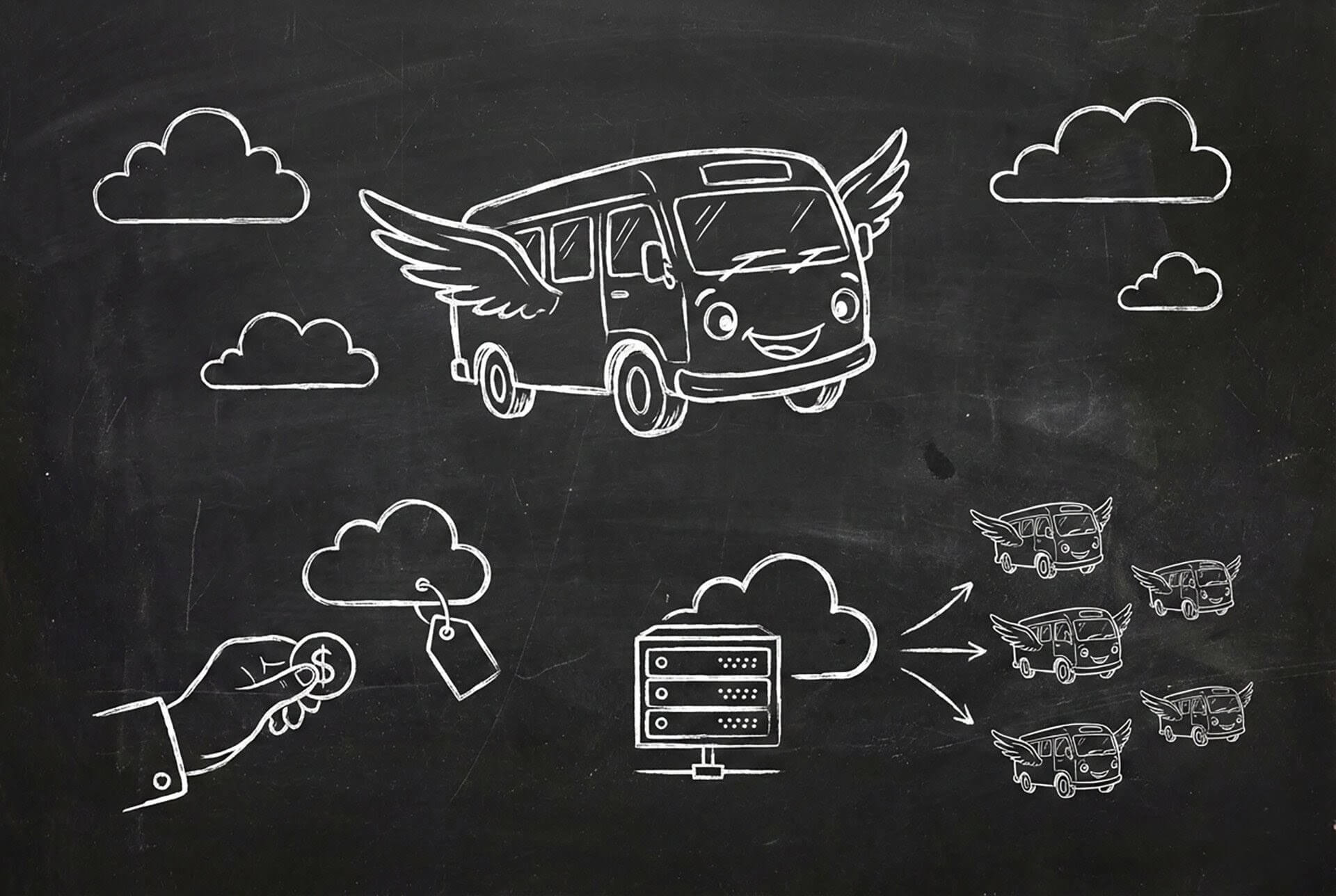
Look, I know you've heard "the cloud" thrown around like it's some magical sky kingdom where your data floats on literal clouds. Spoiler alert: it's not. There are no clouds. Just someone else's computer in a massive warehouse, probably in Virginia.
But here's the thing — cloud computing is actually brilliant, and I can prove it using something every Kenyan understands: the matatu business model.
The Matatu Analogy Nobody Asked For (But Everyone Needs)
Remember when your uncle told you he wanted to start a transport business? He had two options:
Option 1: Buy the whole matatu — Drop 3-5 million on a vehicle, hire a driver, a conductor, get licenses, insurance, handle repairs, and pray to God nothing major breaks before you break even.
Option 2: Hire a matatu when you need it — Pay per trip, per day, or per route. Someone else handles the headaches. You just show up, transport your people, and go home.
Cloud computing is Option 2, but for technology.
Why Companies Don't Want to "Buy the Matatu" Anymore
Back in the day (like early 2000s), every company that needed a website or an app had to buy physical servers. These machines sat in a room somewhere — usually too cold, because servers hate heat like your laptop hates opening too many Chrome tabs.
This meant:
- Upfront costs: Buying servers is expensive. Think iPhone-Pro-Max-on-launch-day expensive, times twenty.
- Maintenance nightmares: Something breaks at 2 AM? Someone's gotta fix it. That someone is sad.
- Scaling issues: Your app blows up overnight? Cool, but you can't just download more server. You gotta buy more hardware, install it, configure it... by the time you're ready, the trend is over and everyone's moved on to the next thing.
It's like buying a 33-seater matatu for a business that only needs to transport 10 people most days, but occasionally has 50 people show up. Inefficient and stressful.
Enter the Cloud: Pay-As-You-Go Infrastructure
Cloud computing companies (AWS, Google Cloud, Microsoft Azure) essentially said, "What if we bought THOUSANDS of servers, and you just rent exactly what you need, when you need it?"
Suddenly you can:
- Start small: Launch your app with the computing power of a basic laptop. If nobody uses it, you're only out like 500 bob a month.
- Scale instantly: Your app goes viral? Cool, the cloud automatically gives you more resources. It's like matatus magically multiplying when there's a crowd at the stage.
- Pay for what you use: Quiet day? Low bill. Busy day? Higher bill, but you're also making money, so it balances out.
No upfront investment. No hardware to maintain. No crying in a server room at 3 AM because something caught fire (yes, servers can catch fire, it's a whole thing).
The Three Types of Cloud Services (In Food Terms, Because Why Not)
1. Infrastructure as a Service (IaaS) This is like renting a food stall with electricity and water. You bring your own jiko, sufurias, and ingredients. You cook. You serve. But you didn't have to build the stall. Examples: AWS EC2, Google Compute Engine
2. Platform as a Service (PaaS) This is like renting a food stall that already has a jiko, gas, and basic utensils. You just bring ingredients and cook. Less setup, faster start. Examples: Heroku, Google App Engine
3. Software as a Service (SaaS) This is like going to a restaurant. Food's ready. You just eat. Zero cooking involved. Examples: Gmail, Salesforce, that project management tool your boss makes you use
Most people use all three without realizing. You use Gmail (SaaS), maybe deploy a side project on Heroku (PaaS), and if you're fancy, run some servers on AWS (IaaS).
New to AWS specifically? Start with AWS for beginners without the confusion to understand EC2, S3, Lambda, and other core services.
Why Should You Care About Cloud Computing in 2025?
Because it's literally everywhere. That app you're building? Cloud. That website your client wants? Cloud. That AI tool you're experimenting with? Definitely cloud — those models are too thicc to run on your laptop.
Even if you're not a developer, understanding cloud computing helps you:
- Make better tech decisions: When someone pitches you a "revolutionary platform," you can ask smart questions like "Is this actually new or just a wrapper around AWS?"
- Understand costs: Why does your company's tech budget look like a Nairobi rent invoice? Probably cloud costs. Now you know.
- Appreciate reliability: Your favorite app rarely goes down because it's running on cloud infrastructure designed by people who take uptime very, very seriously.
There's Always a Catch
Cloud computing isn't perfect. The costs can sneak up on you like fare hikes during rush hour. One minute you're paying 2k a month, next minute it's 200k because someone left a server running that nobody's even using.
Learn to control those costs with cloud cost optimization strategies - because nobody wants surprise bills.
Also, you're trusting another company with your data. For most people, that's fine — these companies have better security than you ever could. But it's something to think about.
And if the cloud provider goes down? You go down with it. Remember when AWS had that massive outage and half the internet stopped working? Yeah. That's the risk. That's why some companies use multi-cloud strategies to avoid putting all eggs in one basket.
One powerful cloud pattern is serverless computing - pay only when your code runs, not for idle servers.
The Bottom Line
Cloud computing took the biggest barrier to building tech — expensive infrastructure — and turned it into a utility bill. You pay for what you use, scale when you need to, and let someone else handle the hard parts.
It's not magic. It's just really good business design.
So next time someone mentions "moving to the cloud," you'll know they're not talking about sky storage. They're talking about renting computing power the same way you'd rent a matatu on events' day — smart, flexible, and way less stressful than buying the whole thing.
Takeaway: Cloud computing is pay-as-you-go infrastructure. You rent servers instead of buying them, scale on demand, and only pay for what you use. It's the matatu model, but for technology. And just like matatus, it's revolutionized how we move — except instead of people, we're moving data.